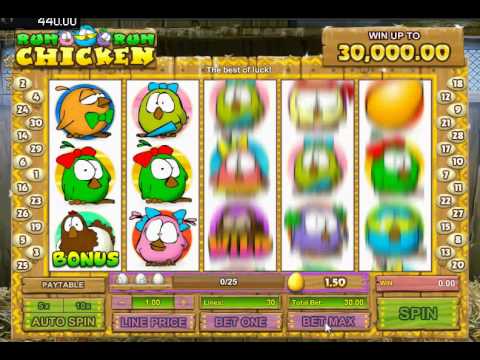
Those who reviews online slots for long enough begins to consider the deeper mechanics. The Chicken Run Slot is a perfect example. On the surface, it’s a bright, farmyard-themed game packed with clucking symbols and the chance for egg-themed payouts. But for a player in the UK, a more intriguing question hides underneath the feathers. Are my wins and losses here just blind luck, the cold math of a Random Number Generator? Or can my own choices influence the experience? This isn’t just a philosophical puzzle. It alters how you play, how you control your money, and how much fun you have. I’m going to dissect this debate, examining the game’s features, its volatility, and its betting options to discover the line between destiny and choice.

The Inexorable Hand of Fate: RNGs and Preordained Outcomes
First, let’s address the rooster in the room. At its heart, the Chicken Run Slot Log In uses a certified Random Number Generator, the same as every other legitimate slot you can play in the UK. This RNG is the mechanism of fate in a digital casino. The second you hit the spin button, the result is already locked in. The symbols that appear have nothing to do with your timing, your mood, or a belief that you’re on a lucky streak. Each spin is a distinct, random event, verified for fairness by bodies licensed by the UK Gambling Commission. This is the most powerful case for fate. The game chooses before you even see the reels stop. Getting your head around this is essential. It kills superstitions and anchors your play in fact. The game’s published Return to Player percentage, a long-term statistical average, is another piece of this predetermined puzzle. It indicates a mathematical destiny over millions of spins, a number you can’t change.
The Arena of Free Will: User Options and Strategic Influence
If the spin is predetermined, where does your freedom come in? It exists in every single decision you make before and after you click that button. Your authority is the true game. You’re not just viewing a random number device. You are the individual defining the rules it uses. Here is where your command resides. Applying it wisely sets a smart player apart. The feeling of control during the spin—the tension, the near-misses—is part of the fun. However, your real command is absolute in the options below. These choices define your whole session, the duration of your play, and your potential for satisfaction, whatever the next random result may be.
- Stake Selection: This is your primary control tool. Selecting your coin denomination and bet tier sets your risk for each spin. Opting for a higher stake amplifies both wins and losses. That is an intentional choice.
- Budget Control: Establishing a budget for your play and adhering to it is the clearest expression of free will in gaming. You are imposing your own limits on how long you play and how much you can spend.
- Utilising Features: Deciding to buy a bonus round, or working out how to utilize free spins and multipliers, are deliberate decisions that alter the value of a predetermined sequence.
- Choosing a Game: The simple act of picking Chicken Run Slot over another game is a choice. You examined its theme, its variance, its special functions, and you chose it.
- Knowing When to Stop: Withdrawing after a victory, or stopping after a loss, is a strong individual choice. It supersedes any desire to chase a result that was already fated.
Practical Takeaways for the Player from the UK
What does this split between approach and mechanics mean for your next attempt on the Chicken Run Slot? Kick off by acknowledging the fixed nature of each spin. This removes annoyance and pointless notions. After that, channel your focus into the aspects where you truly have control: your budget, your wager amount, how long you gamble, and your application of the safety options. Familiarize yourself with the paytable and bonus features not to predict the next payout, but to comprehend what the outcomes fate brings could be valued at. Choose games with a volatility that matches your appetite for risk. This method gives you harmony. You acknowledge the machine’s unpredictability while assuming full ownership for your own choices and restrictions. This outlook leads to a more enduring and pleasurable experience. You engage with the game. It doesn’t control you.
Safe Betting: The Greatest Expression of Free Will
In the UK’s regulated market, the most important place for free will isn’t in the game’s code. It’s in your own behaviour. The tools that licensed operators give you—deposit limits, time-outs, self-exclusion, reality checks—are tools of pure free will. Using them is a definite decision to put your own well-being above the game’s random results. This step goes beyond the whole debate. While the slot’s outcomes are fated, your relationship with gambling is not. You have the complete power to set boundaries, to walk away, and to treat the game as paid entertainment, not as a puzzle you can solve. Using this form of free will isn’t just a good idea. It’s the single most important move any player can make. It keeps the game a fun pastime and stops it from becoming a problem.
The Mental Game of Control: Near-Misses and Bonus Rounds
The game’s design skillfully taps into our craving for control, often blurring the line between fate and free will. Elements like “hold and re-spin” or bonus rounds where you pick from objects are masterful at creating this perception. When you get to choose which henhouse to look inside for a prize, you feel a genuine sense of agency. But here’s the trick: the prize behind each door was assigned by the RNG the moment the bonus round started. Your free will is in the act of choosing. The fate is in the pre-set value of your choice. “Near-miss” outcomes work the same way. These are losses where a jackpot symbol just slips off the reel. They are fated to look like almost-wins, deceiving your brain into thinking the next spin might be the one. Spotting these design tricks helps you enjoy the illusion of control without forgetting the reality of the RNG.
Variance: The Link Linking Chance and Selection
To understand the predetermination and autonomy conversation, you have to understand a slot’s volatility. The Chicken Run Slot’s volatility—whether it’s minimal, average, or high—is a fixed part of its blueprint. That’s its destined character. But your selection to play it, aware of that characteristic, is your autonomy in practice. You’re matching your own liking to the game’s character. A high-volatility game, for instance, is designed to distribute less frequently but with greater prospective wins. You demonstrate your free will by selecting such a game only if your budget and your patience can manage a more challenging ride. In effect, you choose the sort of fate you want to dance with. Do you desire the more consistent, smaller returns of a low-risk game? Or the pronounced swings of a high-volatility one? Your educated decision here links your desire for a particular encounter with the game’s fixed numerical blueprint.
FAQ
Is it true that the outcome of each spin on Chicken Run Slot truly random?
Yes. Every spin on Chicken Run Slot at sites licensed by the UK Gambling Commission is driven by a certified Random Number Generator. This assures the result is fully random, separate from any previous spins, and unable to predict or change. The outcome is basically “fated” the moment you start the spin.
Where do I actually have control when playing this slot?
Your control lies entirely in the choices you make *around* the random spin. This means setting your bet size, deciding on a strict loss limit and session budget, selecting when to walk away, and using responsible gambling tools like deposit limits. You also manage which game you play based on its RTP and volatility.
Is it true that buying a bonus feature change the fate vs. free will argument?
It brings a choice but doesn’t change the core randomness. Buying a bonus is an act of free will to get to a feature right away. But the results *inside* that purchased bonus are still generated randomly by the RNG when you buy it. You’re picking the experience, not the outcome.
How does the game’s volatility relate to this debate?
Volatility is a set, “fated” part of the game’s design. It determines how often wins come and how big they can be. Your “free will” is displayed when you choose to play a game with a volatility level that fits your bankroll and style. You’re picking the type of random outcome pattern you’re okay with.
Can it be said that near-misses a sign that I’m close to a win?
Not at all. Near-misses are a intentional psychological trick, not a signal of what’s coming next. Every spin is independent. A near-miss on one spin tells you nothing about the next one. They are created to create a false sense of control and to keep you playing, but they are simply another kind of pre-determined loss.
What is the most important way to use my free will when playing slots?
The most vital use of your free will is to practice responsible gambling. Use the operator’s tools. Set deposit limits, take time-outs, and pay attention to reality checks. Decide beforehand what amount of money you can afford to lose and do not go past it. This personal discipline is the ultimate control you have over your gambling.